

Transferring property ownership through a deed in New Jersey might appear simple, especially since the documentation is relatively short. However, the process involves legal complexities and technical nuances that, if mishandled, can result in significant financial and title-related consequences. With experience handling over a thousand deed transfers, I’ve seen firsthand how improper execution can create future headaches.
This article will walk you through whether or not you need an attorney, the risks of going it alone, necessary forms, potential legal issues, and the associated costs.
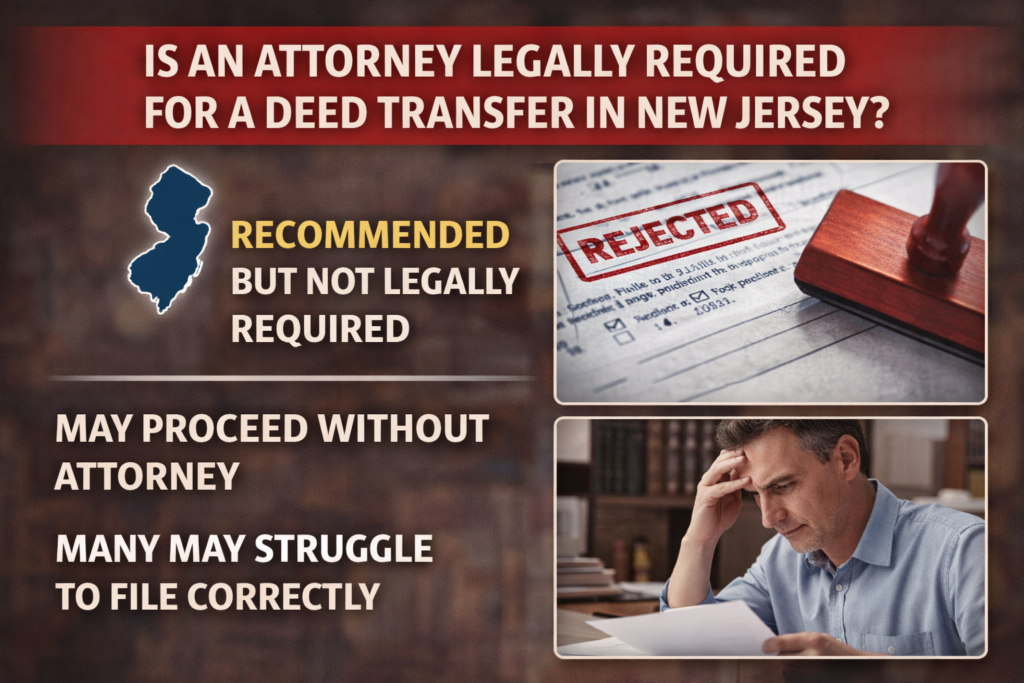
Is an Attorney Legally Required for a Deed Transfer in New Jersey?
In New Jersey, it is not legally required to hire an attorney to complete a deed transfer. Unlike states such as Massachusetts where attorney involvement is mandatory, New Jersey only recommends it. Nonetheless, it’s customary and often beneficial to retain legal counsel.
Many individuals attempt the process solo—submitting incorrect or incomplete paperwork to the county clerk’s office—only to have it rejected repeatedly. Eventually, the county may even recommend hiring an attorney.
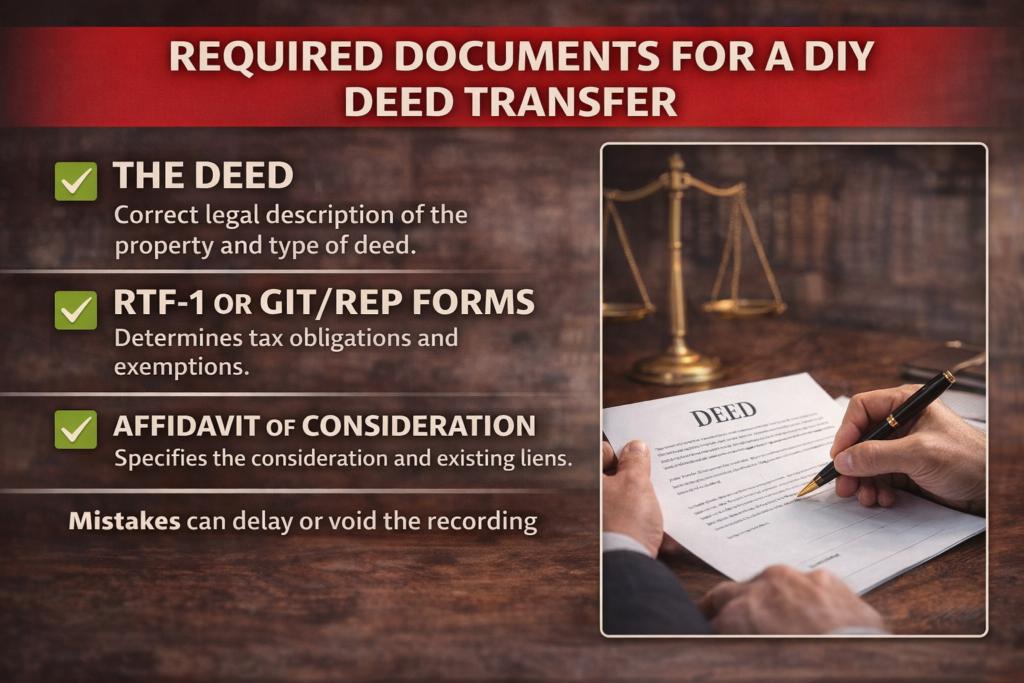
Required Documents for a DIY Deed Transfer
If you choose to proceed without an attorney, ensure you prepare and submit the following forms correctly:
- The Deed: Includes the correct legal description (lot and block numbers), names of prior and new owners, and the type of deed (quitclaim or warranty).
- RTF-1 or GIT/REP Forms: Required to determine if the transfer is subject to the “exit tax” for non-residents. If you’re a NJ resident or qualify for an exemption (e.g., primary residence under $1,000), this must be clearly stated to avoid unnecessary withholdings.
- Affidavit of Consideration: Details the consideration (monetary value or mortgage), identifies existing liens, and must be properly notarized. A Tax ID of one of the grantors is required.
Mistakes in any of these forms can delay or void the recording.

Why Hiring an Attorney May Be in Your Best Interest
While not mandatory, having an attorney can:
1. Save Time and Avoid Rejection
Common DIY mistakes include:
- Incorrect legal descriptions
- Misspelled names
- Improper or missing notarization
- Missing references to prior deeds
These errors result in wasted time, resubmissions, and in some cases, unrecorded deeds.
2. Spot Title or Ownership Issues
Attorneys can identify and resolve title risks, such as:
- Marital Interests: Even if a spouse is not on title, they may have to sign the deed.
- Creditor Issues: Transferring to someone with judgments can create title clouds.
- Inheritance Impacts: Improper transfers could eliminate stepped-up basis benefits, resulting in higher capital gains taxes.
3. Avoid Future Legal Disputes
An improperly handled deed transfer can delay or derail future sales, refinances, or estate proceedings.
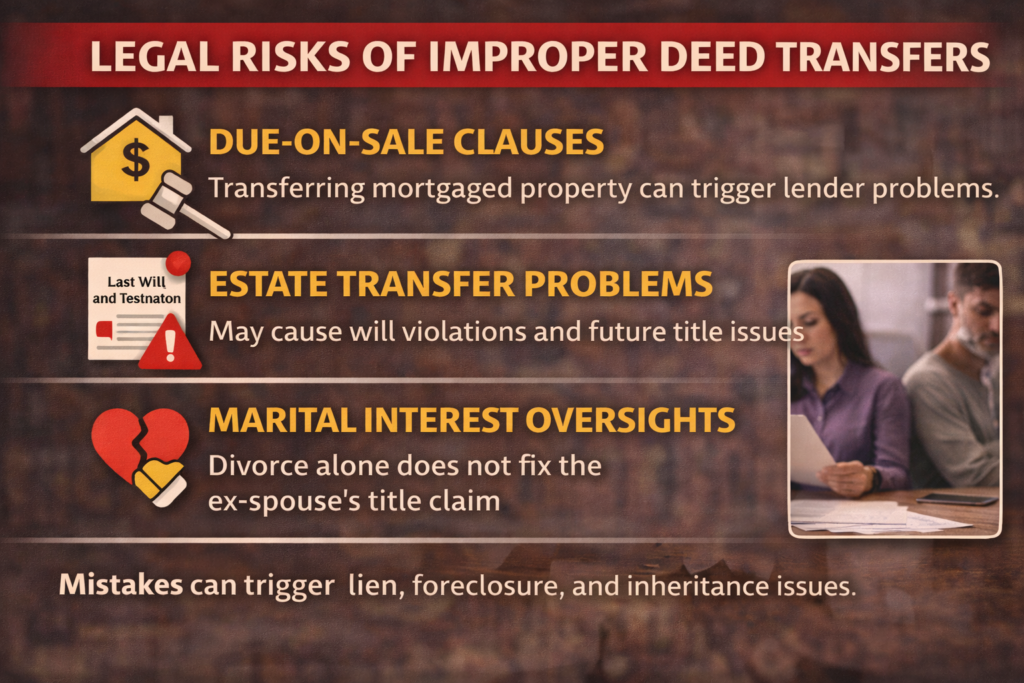
Legal Risks of Improper Deed Transfers
1. Due-on-Sale Clauses
If you transfer a property with an existing mortgage, most mortgages contain a clause allowing the lender to call the loan due. Although rare, banks have enforced this—leading to foreclosures and financial loss for investors. Fannie Mae and Freddie Mac–backed loans have protections, but only if certain steps are followed.
2. Estate Transfer Problems
Counties do not verify estate compliance during deed recording. This means you can record a deed in violation of the will or without authority, causing major problems during future title searches or sales.
3. Marital Interest Oversights
A common error is assuming that a divorce automatically removes a spouse’s interest. Without a deed or divorce decree resolving ownership, the ex-spouse may still have a claim. Resolving this during a closing can become a legal and financial mess.
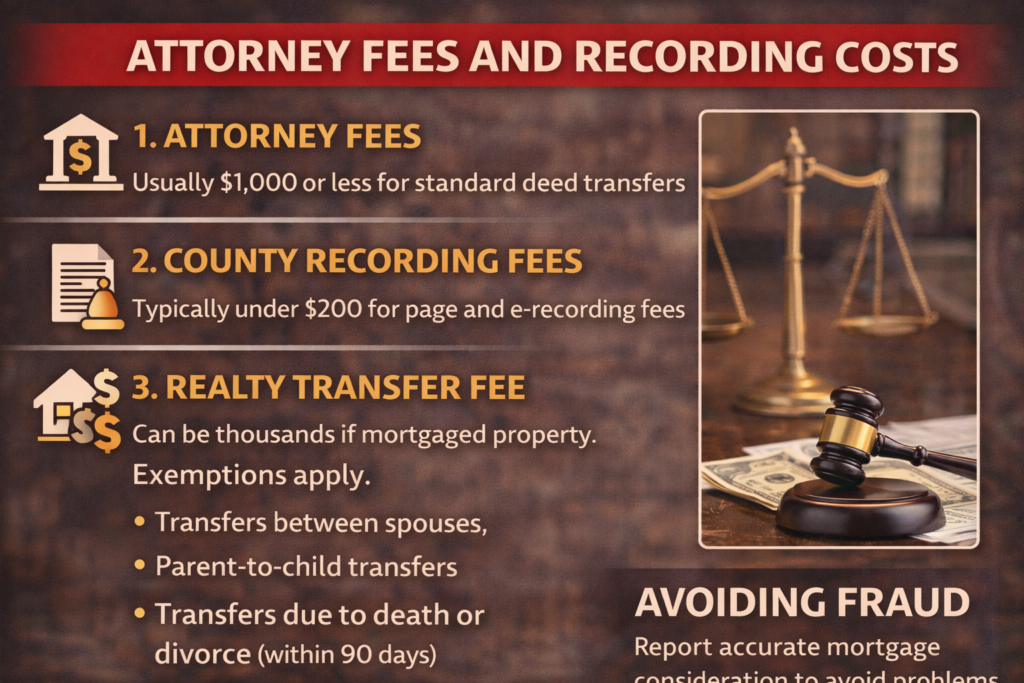
Attorney Fees and Recording Costs
1. Attorney Fees
Attorneys generally charge a flat fee under $1,000 for standard deed transfers. While more complex cases may cost more, the legal fee is usually minimal compared to the value of the real estate involved.
2. County Recording Fees
These are usually under $200, which includes page fees and e-recording service fees (e.g., deeds.com or SimpliFile).
3. Realty Transfer Fee
This can be the largest cost if the transfer involves an outstanding mortgage. For example, a $500,000 mortgage can trigger a $3,000–$4,000 fee unless an exemption applies.
Exemptions include:
- Transfers between spouses
- Parent-to-child transfers
- Transfers due to death or divorce (within 90 days)
4. Avoiding Fraud
The affidavit of consideration must accurately reflect the mortgage amount and consideration. Falsely omitting this information can be considered fraud, with serious legal consequences.
Conclusion: Get It Right the First Time
Deed transfers may seem straightforward but carry hidden legal landmines. A minor oversight can result in title defects, delayed closings, unnecessary taxes, or even foreclosure.
Hiring a real estate attorney can prevent costly mistakes, streamline the process, and ensure your property rights are secure—especially when so much is on the line.
Considering a deed transfer? Don’t risk future complications. Consult an experienced real estate attorney to ensure it’s done right.